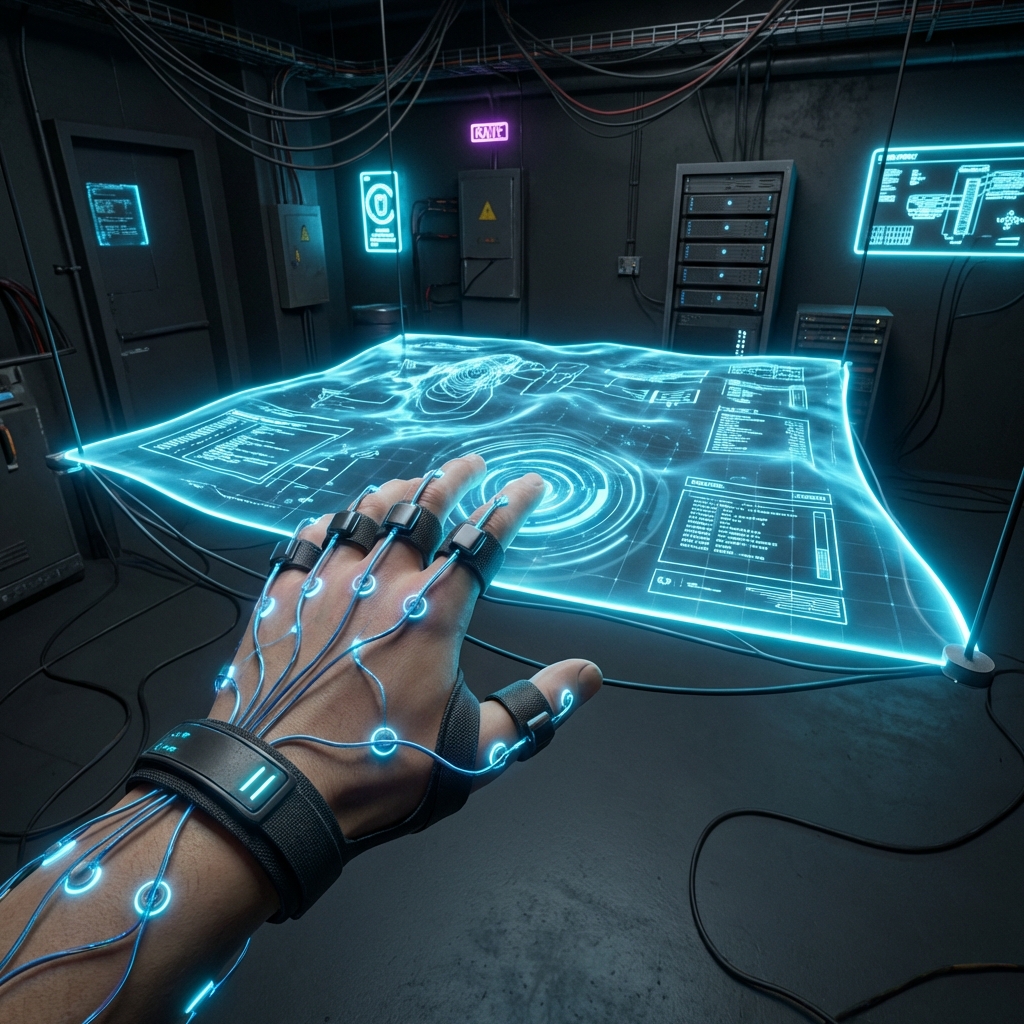
Mechanism of Action: The Sensation of Friction
When a finger slides across a standard glass surface, the friction is relatively uniform. To simulate texture, we must create localized 'friction nodes'. By applying an alternating current (AC) to a transparent conductive layer (usually Indium Tin Oxide) beneath the glass, we generate an attractive force between the finger's skin and the surface. This effectively increases the perceived drag. By modulating this frequency at kilohertz rates, we can simulate complex surface profiles. For example, a high-frequency square wave can mimic the jagged ridges of coarse-grain sandpaper, while a smooth sine wave at lower frequencies simulates the soft ripple of silk.
Latency and Refresh Rates: The 1ms Barrier
The human fingertip is incredibly sensitive to temporal discrepancies. If the tactile feedback lags behind the visual animation by more than 10 milliseconds, the illusion of texture collapses into a vague 'buzz'. Our iTacto Gen-4 chipset operates at a 2000Hz sampling rate, achieving a photon-to-touch latency of just 1.2ms. This is critical for applications like virtual keyboards where the 'click' sensation must occur exactly at the moment of peak finger acceleration. Without this precision, users experience 'haptic fatigue'—a state where the brain rejects the artificial sensation as unnatural.
Comparative Analysis: Haptic Modalities 2026
| Technology | Resolution | Power Draw | Main application |
|---|---|---|---|
| ERM (Eccentric) | Low | High | Casual Gaming |
| LRA (Linear Resonant) | Medium | Medium | Smartphone Taps |
| Electro-Vibration | Ultra-High | Low | Professional UIs |
| Ultrasonic Mid-Air | Spatial | Ultra-High | Automotive / VR |
The Path to Commercialization
While EVP was once limited to high-end medical simulators, the scaling of manufacturing has brought the cost of integration down to $1.50 per unit for high-volume consumer electronics. By 2027, we expect every flagship tablet to feature a 'Tactile OS' where buttons, sliders, and textures help navigate complex workflows without visual confirmation. This is not just an aesthetic upgrade; it is a critical accessibility leap for the visually impaired and a safety requirement for heads-up displays in automotive sectors.
Technical Verdict
Texture rendering is the final frontier of the digital interface. As we move closer to 'Zero Surface' interaction, the ability to restore the sense of touch through electro-static modulation will be the defining feature of the next decade's most successful hardware platforms.